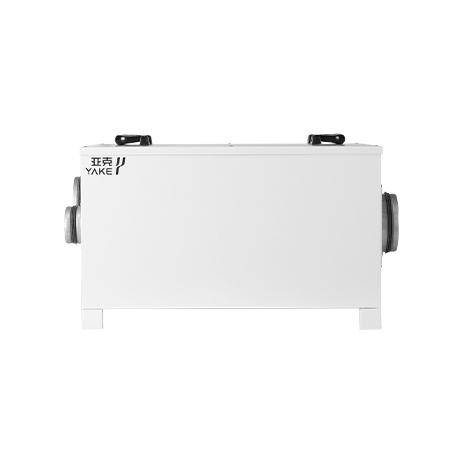
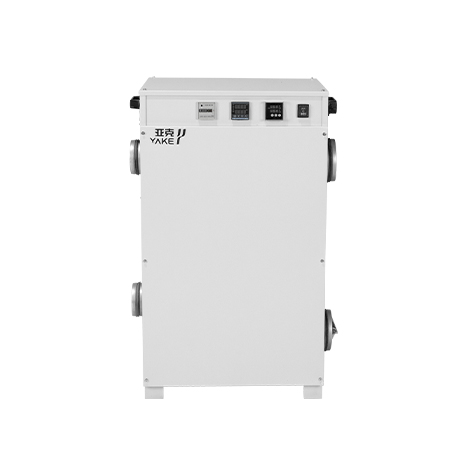
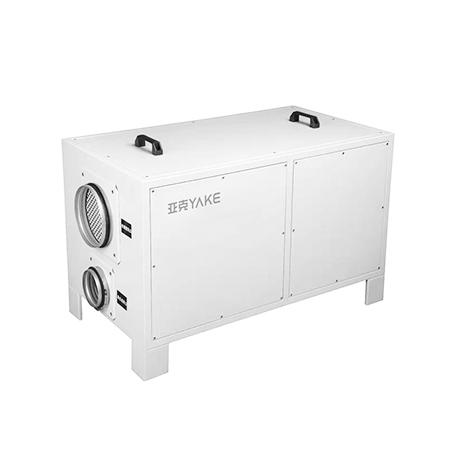
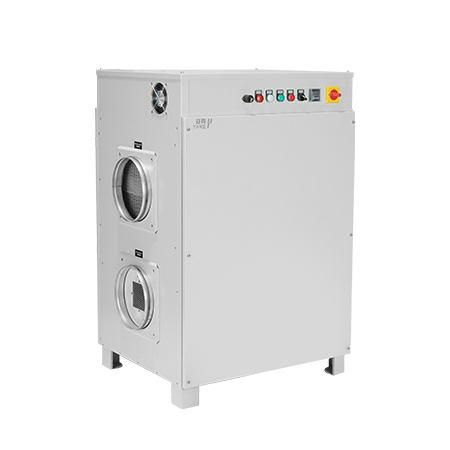
Product selection should be confirmed against temperature, target humidity, airflow, drainage, power supply, and installation conditions.
DEFINITION
What is a desiccant rotor dehumidifier?
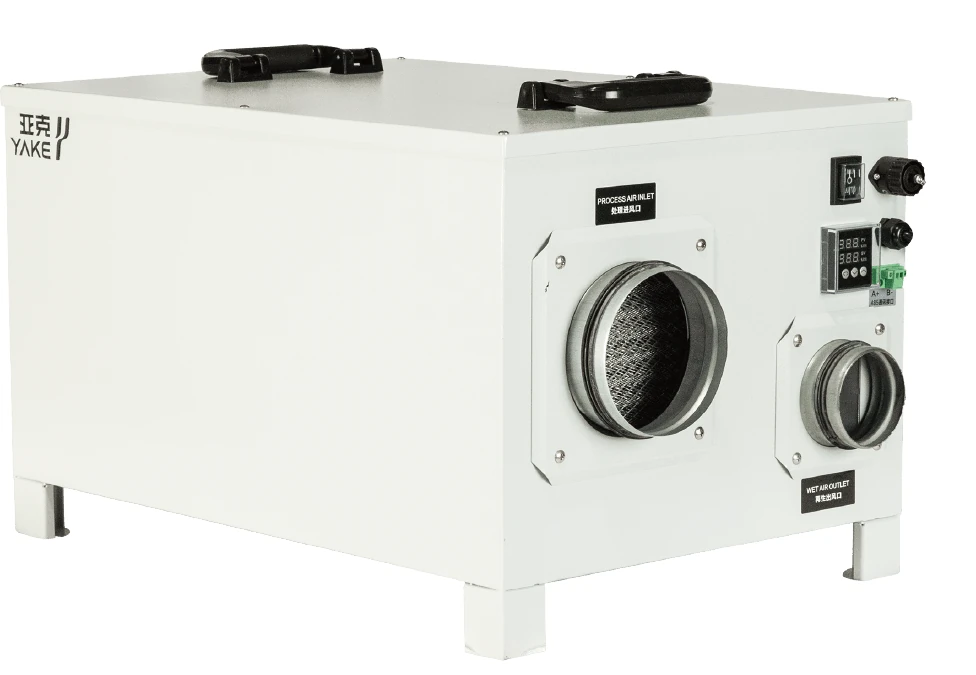
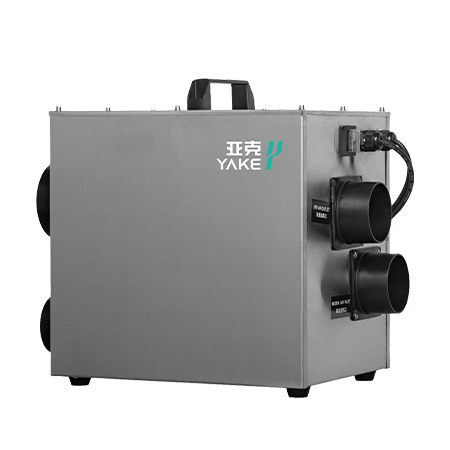
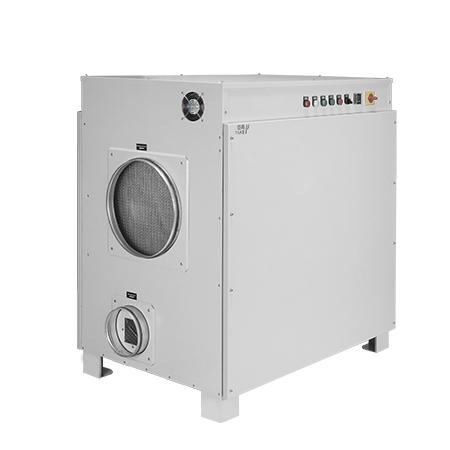
A desiccant rotor dehumidifier adsorbs moisture from process air with a rotating wheel. A separate heated reactivation air stream regenerates the rotor and carries moisture away. This range is reviewed for lower-temperature or lower-humidity duties using both air paths and the required outlet condition.
Yakeclimate designs and manufactures industrial dehumidification equipment for complex climate applications, with a focus on agriculture and energy projects.
Product overview
How this product family supports a project
Desiccant rotor dehumidifiers for lower dew-point applications and process environments requiring stable dry air.
01
Desiccant rotor technology for low-temperature and lower-humidity operating conditions.
02
Multiple process-airflow ranges for project-based selection.
03
Separate process and reactivation air paths reflected in model specifications.
04
Selection support based on target humidity, dew point, temperature, and airflow conditions.
MODEL SELECTION
Rotary desiccant model range
Compare eight RY models from 12 to 456 L/day at 20°C/60% RH. Check process airflow, reactivation airflow and power together. RY-1000M process airflow is 1000 m³/h.
Rated data by model. Scroll horizontally to review all columns.
PPD means US pints per day, converted as L/day × 2.113 and rounded to the nearest whole number. L/day retains the original rated precision. Conversion is not an AHAM/DOE test result; ratings at different conditions cannot be ranked directly.
COMPARE RATING CONDITIONS
When to compare desiccant and refrigerant equipment
Compare both routes against entering-air temperature/RH, target humidity or dew point, airflow and the available reactivation arrangements. Lower-temperature or lower-humidity duty can justify a desiccant review. Conventional commercial and industrial duties can also be assessed with refrigerant models. The RY ratings use 20°C/60% RH; the RYCM and RYCF refrigerant ratings use 30°C/80% RH, so dividing their rated L/day values cannot establish an efficiency advantage.
RY desiccant capacity ratings
20°C / 60% RH
RYCM / RYCF refrigerant capacity ratings
30°C / 80% RH
TWO AIR PATHS
Process air and reactivation air: plan both paths
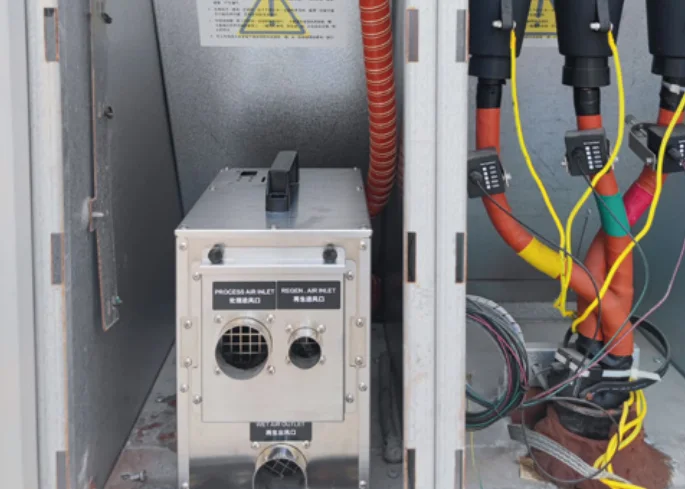
The rotor adsorbs moisture from the process air. A separate reactivation air stream carries the released moisture away. Use both airflow columns in the model table to prepare the installation; confirm inlet boundaries, discharge routes and service access with the selected model.
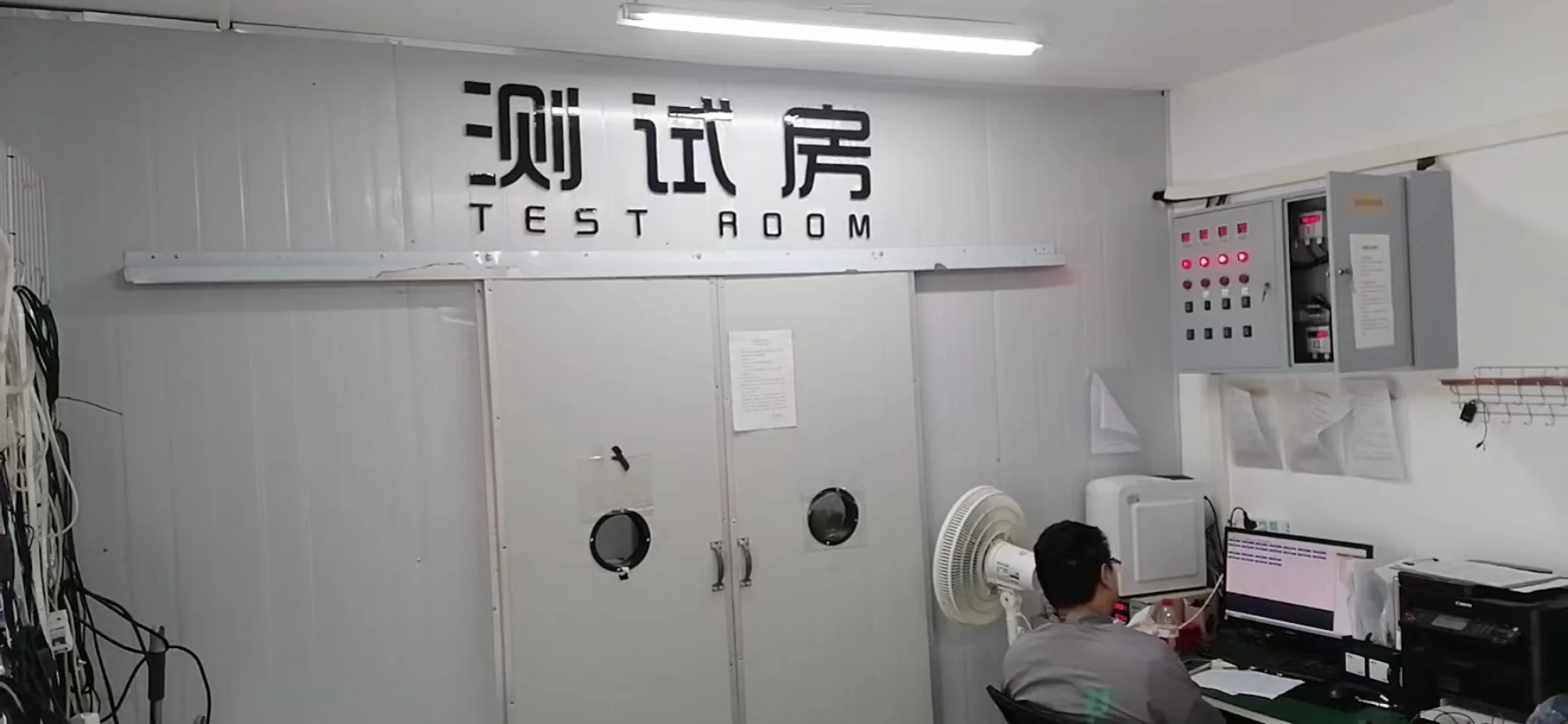
Yakeclimate prototype testing facilities
01
Process-air path
Entering process air → rotor → dry-air outlet. Provide inlet temperature/RH, required process airflow and the target outlet condition.
02
Reactivation-air path
Reactivation inlet → heating and rotor regeneration → moisture-laden exhaust. Provide the proposed intake and exhaust routes and the available electrical supply.
03
Installation review
Keep the two air paths explicit in the layout. Confirm pressure requirements, exhaust discharge location, access and permitted changes to the served space.
PROJECT PERFORMANCE
Confirm low-temperature and low-dew-point duty
The catalogue capacity is tied to 20°C/60% RH; the applicable temperature range is a separate field. Send the actual entering-air condition and the target RH or dew point to confirm removal, outlet temperature, airflow and pressure. These ratings do not establish one guaranteed outlet dew point for every model or installation. A performance curve or a project-specific value requires corresponding model data. Low-temperature performance can be tested in our laboratory against your project conditions; submit your requirements to agree the test scope and request the resulting curve.
Confirm temperature, RH or dew point
Inlet → outlet
Review at the actual duty
Flow + pressure
POWER & SERVICE
Power, installation and service inputs
Retain the listed 50Hz supply and Rated Power definition when planning electrical service. Rated power is not a measurement of continuous all-day energy use. Confirm the duty cycle, reactivation exhaust path, dimensions and service access. A 60Hz supply or another regeneration configuration requires a project review; the listed models do not establish steam or gas regeneration availability.
Entering-air temperature/RH, target RH or dew point, and required process airflow
02
Room or process volume, moisture sources, sealing, ventilation and operating hours
03
Reactivation intake/exhaust route, pressure requirements, installation space and service access
04
Voltage / phase / frequency, candidate model, quantity and control-interface requirements
FURTHER READING
Selection and application resources
Complete the operating-condition inputs
Review equipment for the application
TECHNOLOGY COMPARISON
Refrigerant versus desiccant rotor technology
The Desiccant Rotor Dehumidifier on this page is part of the Desiccant Rotor Dehumidifier range; compare the rated values in each model specification table with the working principles below.
Technology route
How it works
Typical applications
Refrigerant dehumidification
Cools air below dew point to condense and separate water vapor
Conventional dehumidification duty in commercial and industrial spaces
Desiccant rotor dehumidification
Adsorbs moisture onto a rotating wheel and regenerates it continuously
Lower-temperature or lower-humidity targets in storage and process environments
Ultrasonic humidification
Adds fine water mist to raise or compensate relative humidity
Humidity compensation in agriculture and process areas
Application fit
Where this product can be evaluated
Application fit depends on the moisture load, operating temperature, room volume, airflow path, and installation constraints.
Step 1 — define the operating conditions. Record the temperature range, current and target relative humidity, moisture load, and the volume of the room or enclosure to be protected.
Step 2 — confirm the site constraints. Check the available power supply, drainage method, airflow or static-pressure requirement, and installation space; for ceiling, cabinet, or portable mounting confirm the fixing method and service access.
Step 3 — review the rated data and confirm the configuration. Compare the rated capacity in l/24h and the surrounding specification values in the table against the recorded conditions, then confirm the configuration with Yakeclimate before ordering.
FAQ
Frequently Asked Questions
Is the Desiccant Rotor Dehumidifier capacity rating based on standard testing conditions?
Rated capacity is published under the named condition in the specification table (for example 30°C/80% RH, in l/24h). Actual moisture removal depends on operating temperature, humidity, airflow, and installation conditions.
Which applications can the Desiccant Rotor Dehumidifier support?
The applications listed on this page are evaluation starting points. Final suitability depends on the moisture load, temperature, airflow, and installation limits of the project.
How does Yakeclimate support project configuration?
We co-develop application-specific dehumidification equipment around the operating conditions, interfaces, and integration requirements of the wider project or system.
What is a rotary desiccant dehumidifier?
It uses a rotating desiccant rotor to adsorb moisture from process air and a separate reactivation air path to remove that moisture from the rotor. Compare both airflows and the rated removal condition by model.
How does a desiccant dehumidifier work?
The rotor moves between moisture adsorption and heated regeneration zones, allowing process-air drying and reactivation to continue. The working-principle guide in the related resources explains the two air paths.
Which desiccant model should I buy for a low-dew-point duty?
Submit the entering-air condition, target dew point, process airflow and reactivation arrangements for a model-specific review. A capacity rating at 20°C/60% RH does not guarantee a particular low outlet dew point.
Can I compare desiccant and refrigerant L/day ratings directly?
These ranges use different rating conditions: 20°C/60% RH for the RY desiccant models and 30°C/80% RH for the RYCM/RYCF refrigerant models. Compare performance at the same actual project condition before selecting.
Do these models suit battery manufacturing dry rooms?
Battery manufacturing dry rooms and large central custom dry-room systems are outside the scope of this product range. The listed industrial desiccant ratings do not establish suitability for those processes.
Project support
Confirm the right configuration for your operating conditions.
Share the operating temperature, current and target humidity, room dimensions, airflow, power supply, drainage method, and installation limits. Yakeclimate can use these details to recommend a suitable next step.