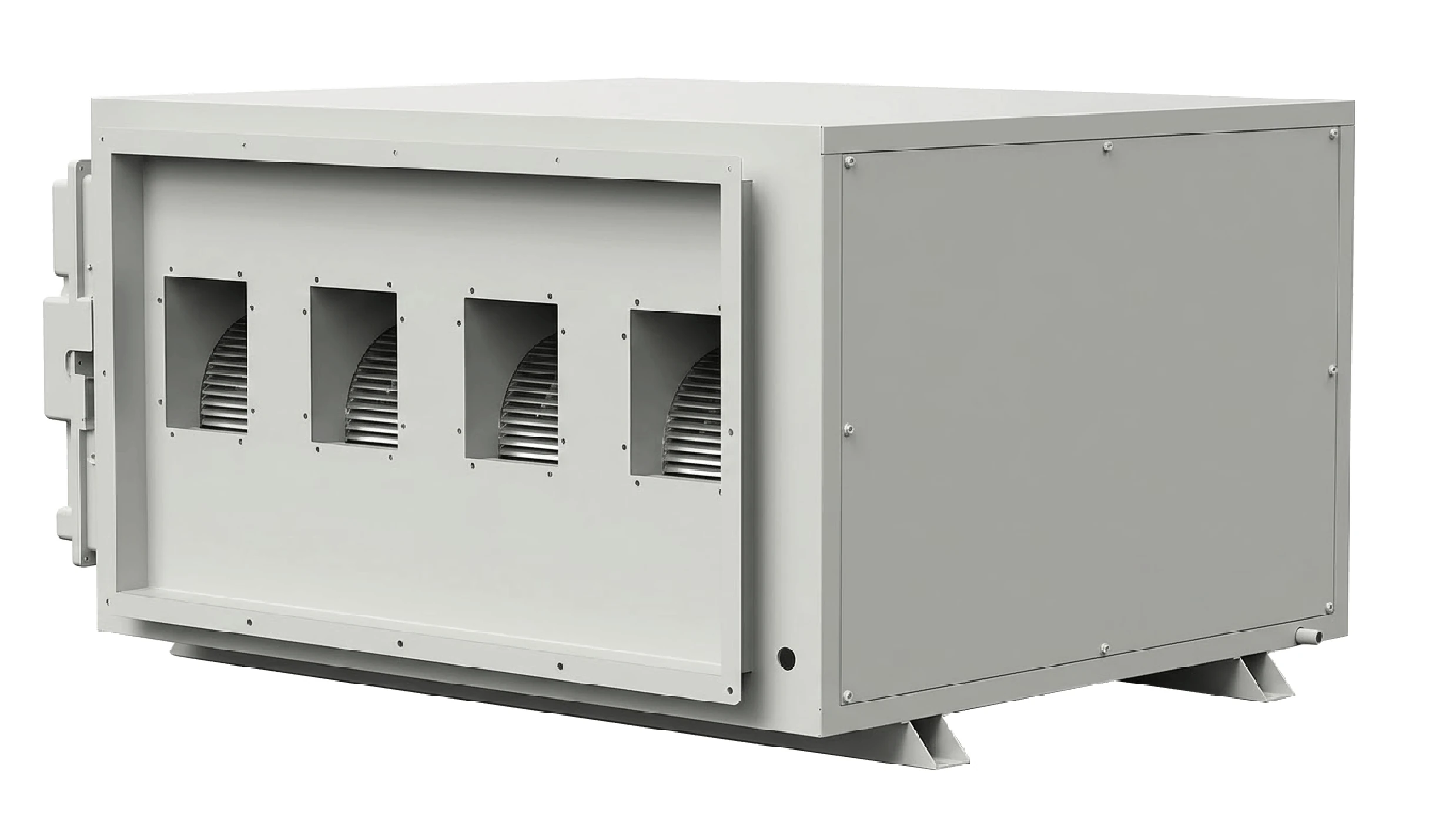
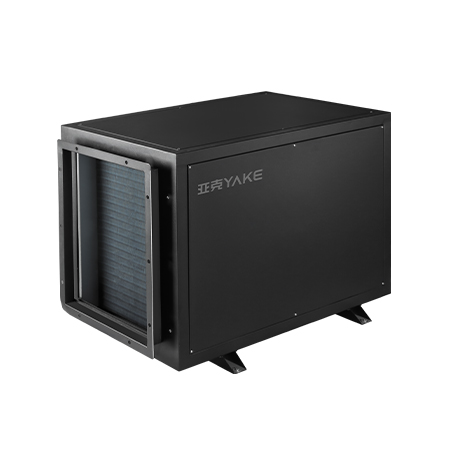
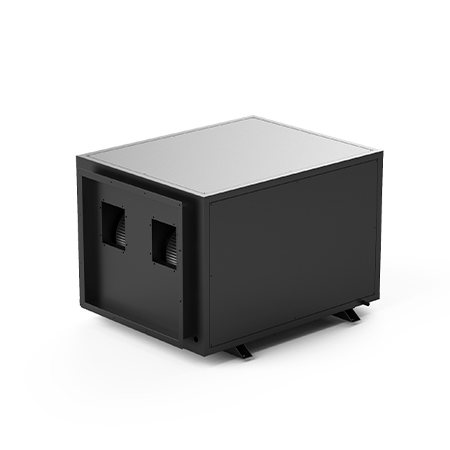
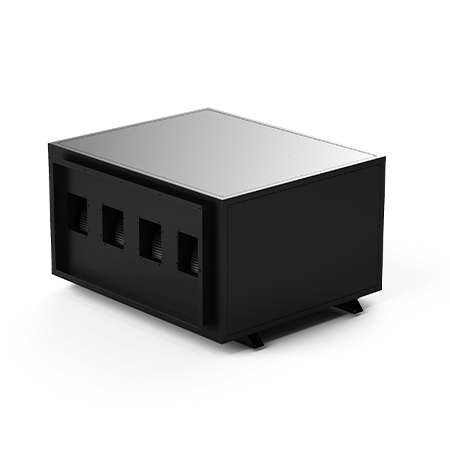
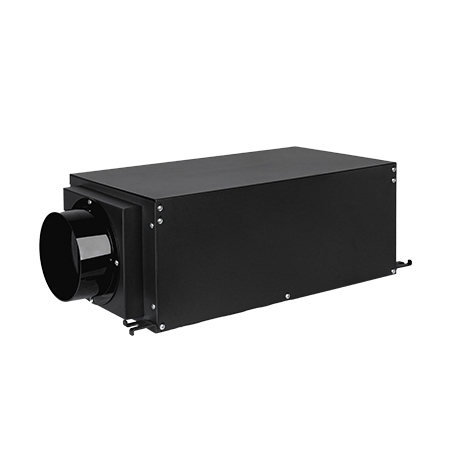
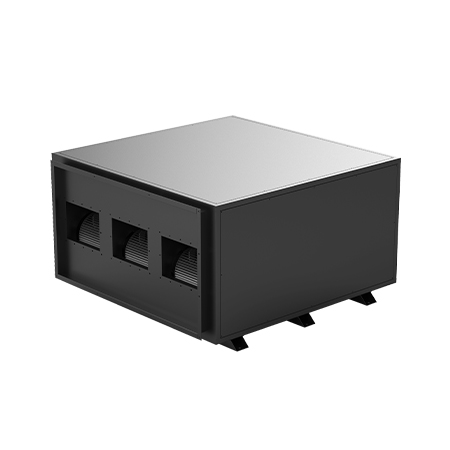
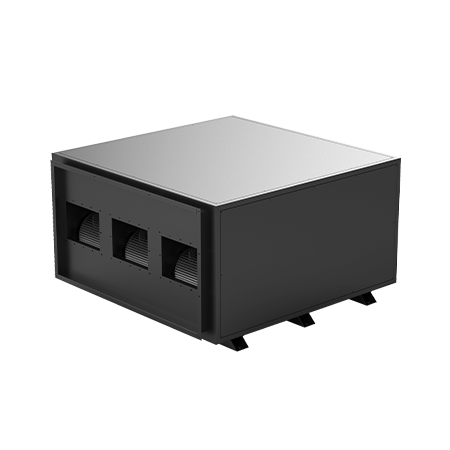
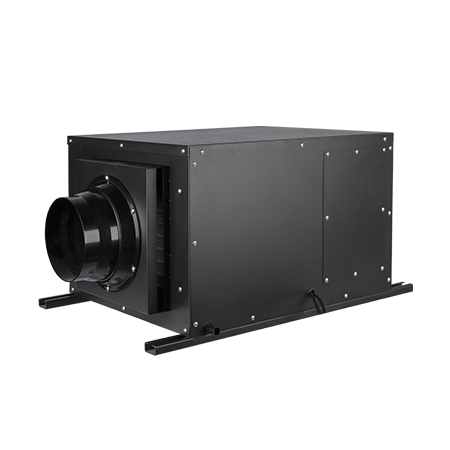
Ceiling dehumidification products for higher-capacity commercial and industrial applications.
Compare ceiling-mounted dehumidifiers for ducted or direct-air project layouts. Check rated capacity, airflow and external pressure before choosing a model.
Product selection should be confirmed against temperature, target humidity, airflow, drainage, power supply, and installation conditions.
DEFINITION
What is a ceiling-mounted dehumidifier?
A ceiling-mounted dehumidifier preserves usable floor space by placing the equipment overhead. Direct-air and ducted layouts must be reviewed against the selected model's airflow, external pressure, drainage, structural support and service access.
Yakeclimate designs and manufactures industrial dehumidification equipment for complex climate applications, with a focus on agriculture and energy projects.
Product overview
How this product family supports a project
Ceiling dehumidification products for higher-capacity commercial and industrial applications.
01
Ceiling-mounted configurations for projects that need to preserve floor space.
02
Multiple capacities available for different room volumes and moisture loads.
03
Airflow, external pressure, drainage, and power supply can be reviewed during selection.
04
Designed for integration into larger commercial and industrial spaces.
MODEL SELECTION
Ceiling-mounted and ducted model range
Compare all ten RYDZ models at the stated rating condition. Follow a model link for its full specifications.
Rated data by model. Scroll horizontally to review all columns.
PPD means US pints per day, converted as L/day × 2.113 and rounded to the nearest whole number. L/day retains the original rated precision. Conversion is not an AHAM/DOE test result; ratings at different conditions cannot be ranked directly.
AIR-PATH OPTIONS
Direct-air or ducted installation
Ceiling mounting describes the equipment position; ducting describes its air path. A ceiling-mounted unit may need a direct-air or ducted layout, subject to model and installation review.
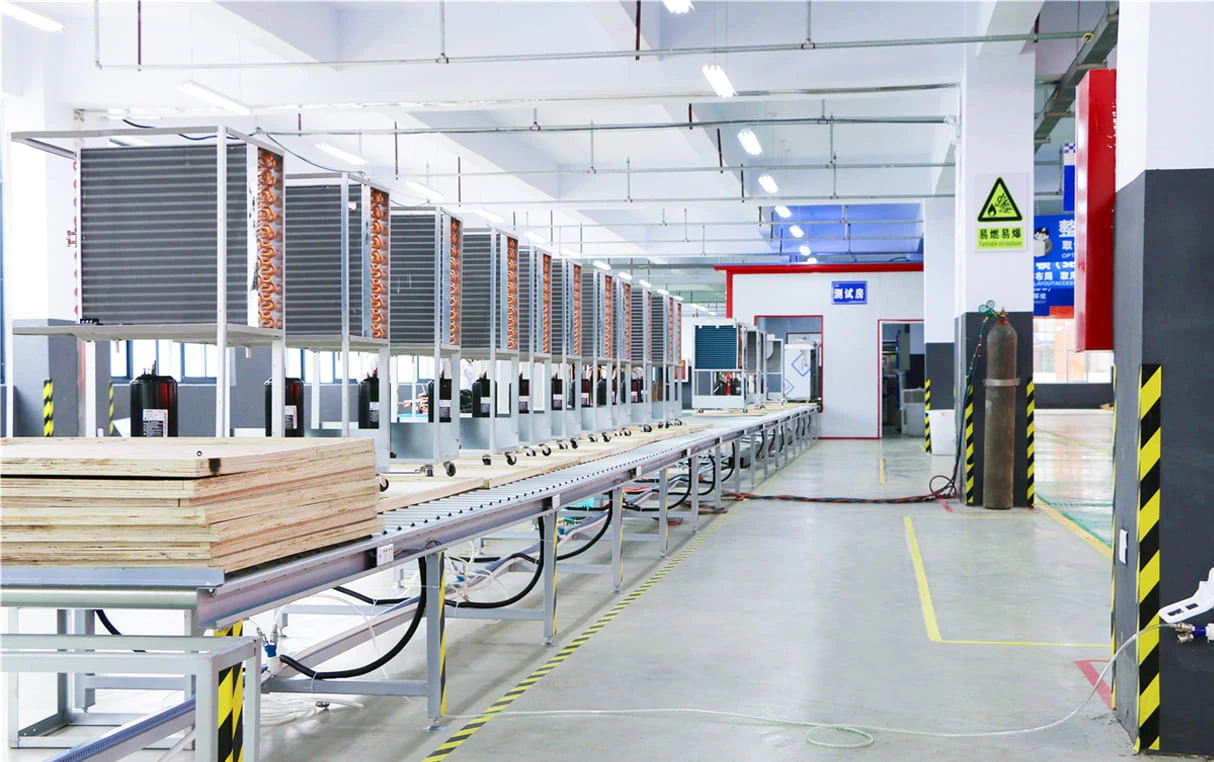
Yakeclimate equipment assembly
01
Ceiling / direct air
Room return air → unit → supply air to the room. Preserve floor space and provide clear intake, discharge, drainage and service access.
02
Ceiling / ducted air
Return path → unit → supply duct → served zone. Submit both air paths, duct sizes, bends, dampers and filter pressure losses.
03
Floor-standing alternative
Consider a floor-standing model where overhead support or service access is impractical. Check the moisture load and the floor-level air circulation route.
AIRFLOW & PRESSURE
Match airflow and external pressure to the duct path
Use the model table to compare airflow and external pressure together. The RYDZ-26DM and 58DM list 40–60 Pa; 90DM and 138DM list 50–80 Pa. Larger models list 100–200 Pa. These values do not specify an allowable duct length. Submit supply and return layouts and their pressure losses for review; an existing HVAC connection also needs airflow and control-interlock checks.
RYDZ-26DM / 58DM
40–60 Pa
RYDZ-90DM / 138DM
50–80 Pa
Larger RYDZ models
100–200 Pa
INSTALLATION REVIEW
Ceiling clearance, drainage and service access
Use the dimensions, net weight and drainage entries below to prepare the installation review. Confirm structural support, access for filter and equipment service, and the drain route with the installation designer. Required clearances and fixings depend on the selected model and structure.
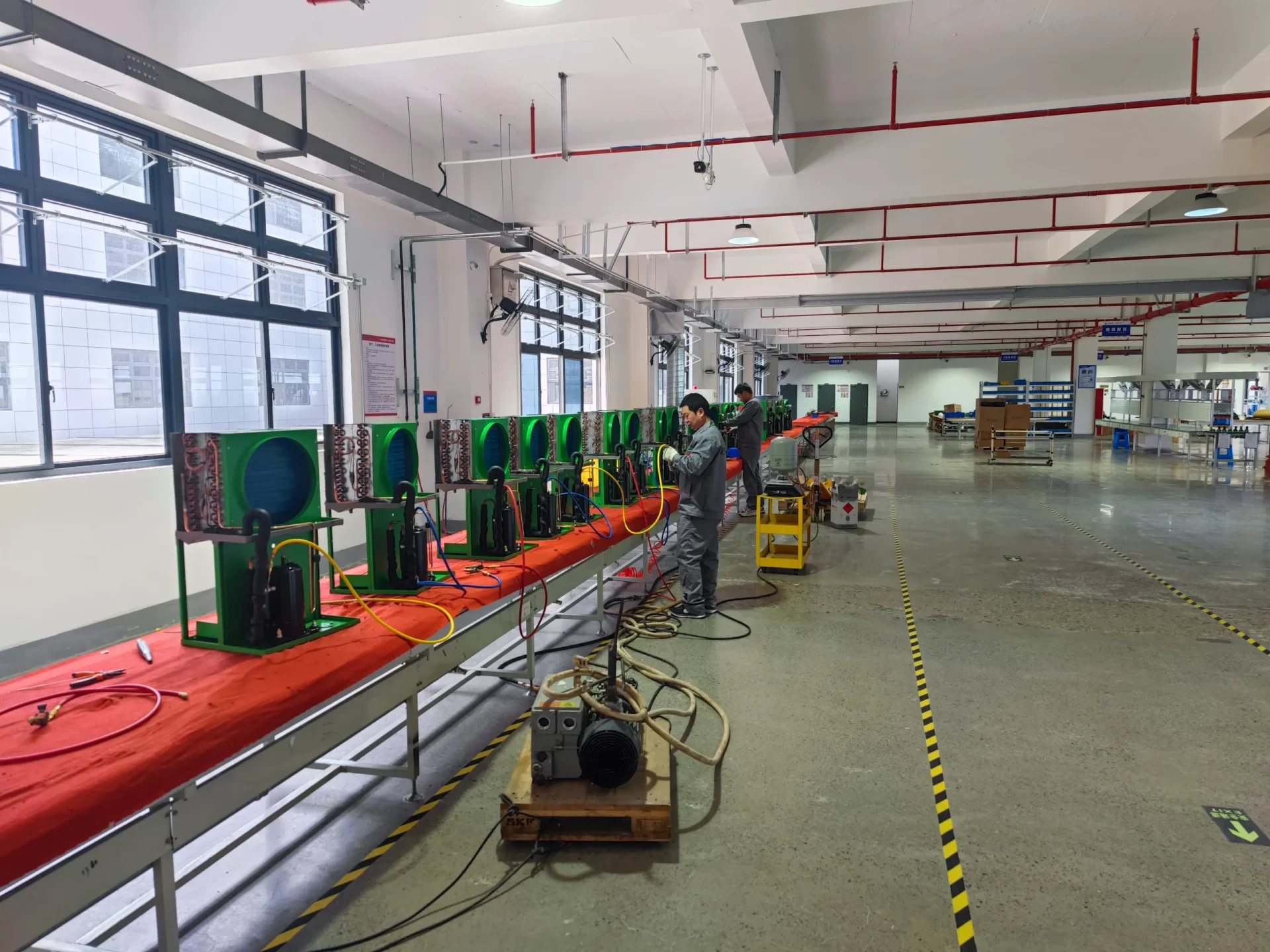
Yakeclimate manufacturing detail
RATING & DUTY
Select capacity at your operating temperature
The RYDZ capacity ratings use 30°C/80% RH. For a greenhouse or grow room, provide the colder night-time condition as well as daytime values. State moisture load, target temperature/RH and operating hours; floor area alone cannot establish the required capacity.
Application, entering-air temperature/RH, target condition, moisture load and operating hours
02
Ceiling clearance, support conditions, service access and drain location
03
Supply/return drawings, duct sizes, bends, dampers and filter pressure losses
04
Site voltage, phase and frequency; control interfaces, quantity and destination country
FURTHER READING
Selection and application resources
Complete the operating-condition inputs
Review equipment for the application
TECHNOLOGY COMPARISON
Refrigerant versus desiccant rotor technology
The Industrial Ceiling Dehumidifier on this page is part of the Industrial Ceiling Dehumidifier range; compare the rated values in each model specification table with the working principles below.
Technology route
How it works
Typical applications
Refrigerant dehumidification
Cools air below dew point to condense and separate water vapor
Conventional dehumidification duty in commercial and industrial spaces
Desiccant rotor dehumidification
Adsorbs moisture onto a rotating wheel and regenerates it continuously
Lower-temperature or lower-humidity targets in storage and process environments
Ultrasonic humidification
Adds fine water mist to raise or compensate relative humidity
Humidity compensation in agriculture and process areas
Application fit
Where this product can be evaluated
Application fit depends on the moisture load, operating temperature, room volume, airflow path, and installation constraints.
Step 1 — define the operating conditions. Record the temperature range, current and target relative humidity, moisture load, and the volume of the room or enclosure to be protected.
Step 2 — confirm the site constraints. Check the available power supply, drainage method, airflow or static-pressure requirement, and installation space; for ceiling, cabinet, or portable mounting confirm the fixing method and service access.
Step 3 — review the rated data and confirm the configuration. Compare the rated capacity in l/24h and the surrounding specification values in the table against the recorded conditions, then confirm the configuration with Yakeclimate before ordering.
FAQ
Frequently Asked Questions
Is the Industrial Ceiling Dehumidifier capacity rating based on standard testing conditions?
Rated capacity is published under the named condition in the specification table (for example 30°C/80% RH, in l/24h). Actual moisture removal depends on operating temperature, humidity, airflow, and installation conditions.
Which applications can the Industrial Ceiling Dehumidifier support?
The applications listed on this page are evaluation starting points. Final suitability depends on the moisture load, temperature, airflow, and installation limits of the project.
How does Yakeclimate support project configuration?
We co-develop application-specific dehumidification equipment around the operating conditions, interfaces, and integration requirements of the wider project or system.
Can a commercial dehumidifier be ducted?
A ducted layout must match the selected model's airflow and external pressure. Send the supply and return paths, fittings and pressure losses for review before confirming a connection.
Which ceiling-mounted dehumidifier should I choose?
Start with moisture load and operating temperature/RH, then check external pressure, dimensions, weight, drainage, power and service access against the model tables.
Is there a small ducted dehumidifier in the range?
RYDZ-26DM and RYDZ-58DM are candidates at 26 and 58 L/day respectively at 30°C/80% RH, with 40–60 Pa external pressure. Check dimensions and the proposed duct path on the model pages before selection.
How should a dehumidifier be hung from the ceiling?
The installation designer must check the selected model's net weight, structural support, drainage and service access. Fixings and minimum clearances need model-specific installation confirmation.
Can I connect it to an existing HVAC system?
Submit the HVAC drawings, air paths and operating sequence for review. Available external pressure does not by itself confirm compatibility with every duct circuit or control arrangement.
Project support
Confirm the right configuration for your operating conditions.
Share the operating temperature, current and target humidity, room dimensions, airflow, power supply, drainage method, and installation limits. Yakeclimate can use these details to recommend a suitable next step.