
A commercial water-damage drying plan starts with the affected materials and safe work zones, then assigns extraction, air movement and dehumidification to each duty. This checklist helps restoration contractors and facilities teams specify equipment, power, drainage and measurement records before mobilization. Equipment runtime alone cannot determine when a wall, floor or cavity is ready to rebuild.
Triage Safety Before Selecting Equipment
Keep people out of areas with unsafe electrical equipment, structural damage, suspected sewage or chemical contamination, or substantial visible mold. Stop the water entry if safe, record the time and locations affected, and ask a qualified professional to assess hazards before entering or operating equipment. Do not energize flood-affected electrical systems or use fuel-powered generators indoors.
A recent supply-line leak, a roof leak, a sewer backup and a flood require different exposure controls and material decisions. Do not call all water from a previously clean source safe: contact with building materials, duration and concealed contamination can change the risk. There is no rule that every clean-water event automatically becomes a fixed contamination category at exactly 48 hours.
EPA flooded-home text guide: safe entry, equipment, cleanup and repair sequence.
Map the affected zones and assemblies
Prepare a documented source assessment, an affected-area map and a list of visibly wet and potentially concealed materials. Identify which walls, floors, insulation, cavities or HVAC components need closer inspection. A thermal image can locate patterns that merit checking; confirm them with the appropriate material measurement.
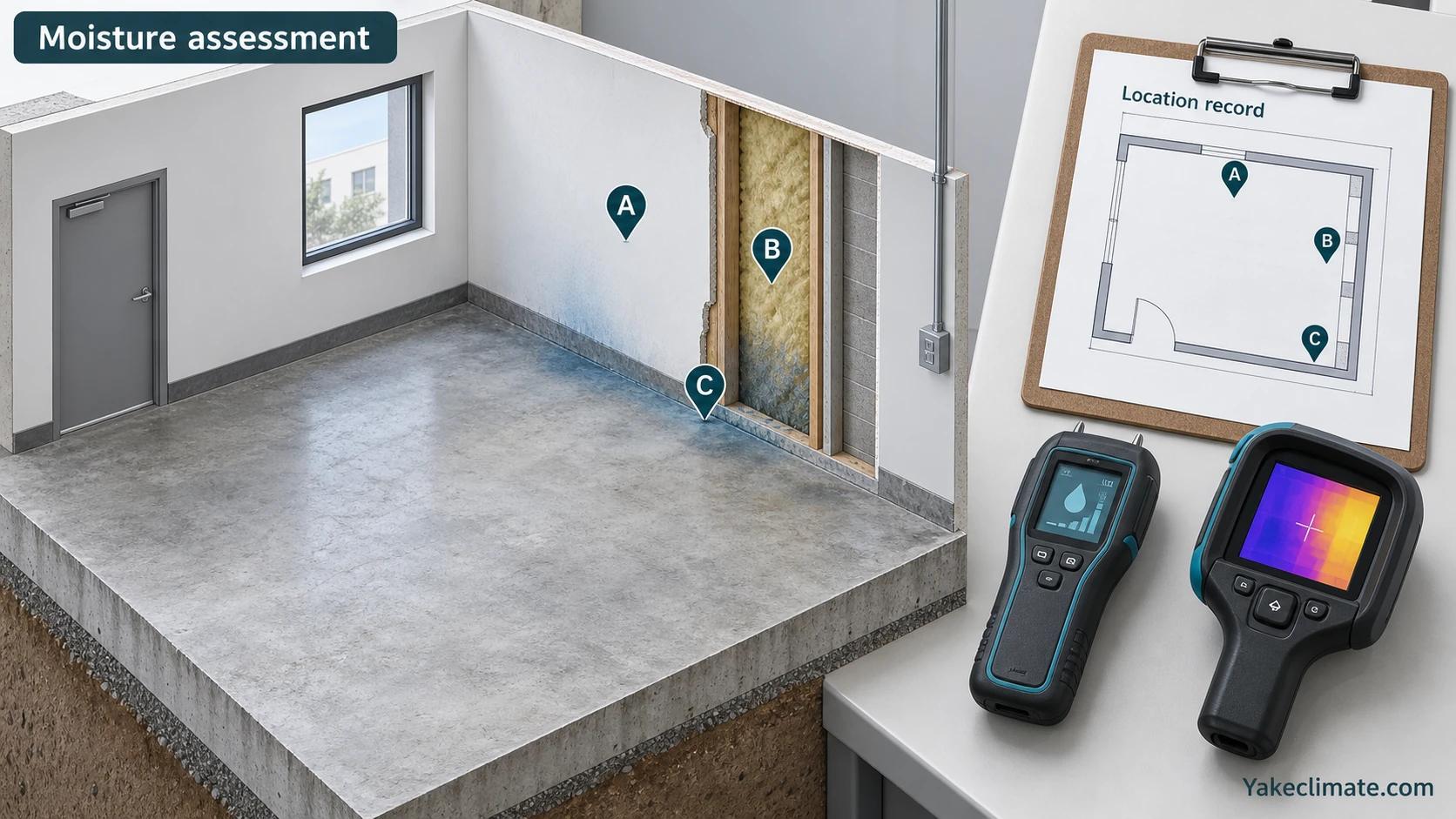
Record measurement location, material, instrument and date so later readings can be compared. Air temperature and relative humidity describe the air; a suitable material meter or test method is needed to evaluate wet building materials. No single handheld reading substitutes for the material manufacturer’s reinstallation criterion or a qualified assessment of hidden damage.
Use a water-damage drying log to keep the marked measurement points, instrument settings, equipment changes and completion review in one dated record.
EPA commercial-building guide: moisture meters, drying methods and remediation planning.
Assign equipment and site responsibilities
Separate the site duties: source repair, electrical safety, contamination assessment, extraction, material removal, air drying and acceptance. Name the responsible person for each before equipment is delivered. A supplier’s capacity rating does not decide which material can be retained or when rebuilding can start.
Write the equipment schedule by zone. Include the expected inlet temperature/RH, removal capacity at that condition, air distribution, safe electrical supply, drain destination, supervision and service access. Record what triggers a changed plan: newly exposed wet material, failed drainage, contamination or measurements that stop improving.
For equipment that moves between treatment zones, review the commercial portable dehumidifier guide before fixing the capacity basis, placement, drainage and supervision plan.
Confirm delivery access and how each unit can be moved, positioned, serviced and removed without compromising the work zone or building exits.
Match equipment to each restoration stage
| Stage | What the service should do | What the equipment cannot prove |
|---|---|---|
| Source and safety | Identify and isolate the water source; assess electrical, structural and contamination risks | A pump or air-drying device makes the site safe |
| Extraction | Remove accessible standing water with equipment suited to the water and site | No moisture remains in cavities or materials |
| Cleaning or removal | Choose material-specific cleaning, containment or removal after contamination assessment | A disinfectant replaces physical cleaning or source repair |
| Drying | Plan air movement, dehumidification, temperature and drainage for remaining moisture | Fans are safe around visible mold or a timer proves complete drying |
| Verification and repair | Compare documented material readings and inspect source control before rebuilding | One RH reading guarantees safe occupancy or future performance |
EPA cautions that fans can spread existing mold; visible growth should be cleaned before fans are used in the affected area. If flood water affected the HVAC system, do not run it as a dryer until a qualified professional says it is safe. A dehumidifier removes water vapor from air after bulk water and source control, but cannot sterilize porous material or reverse structural damage.
EPA flooded-home text guide: do not use fans on visible mold before cleaning.
Coordinate the drying stage with the responsible cleaning and material-removal team. Record which zones are released for air movement and what remains isolated. Do not use dehumidification to substitute for a contamination decision or reopen an area solely because air humidity has fallen.
Keep occupied areas, temporary work zones and shared HVAC paths on the same site plan so changes to airflow are reviewed by the responsible team.
Commercial equipment schedule
| Schedule field | Entry to prepare |
|---|---|
| Zone and duty | Affected assembly, accessible wet surfaces and required isolation |
| Removal basis | Model data at the expected inlet temperature/RH; identify measured versus calculated data |
| Deployment | Position, air path, safe power, condensate route and maintenance access |
| Monitoring | Named operator, inspection method, repeat material locations and response to stalled progress |
| Release | Accepted material criterion, responsible sign-off and equipment-removal sequence |
Compare industrial dehumidifier formats for the planned duty and use the sizing calculator to organize air-side inputs. Add the material-drying assessment separately; the calculator cannot inventory hidden water.
Prepare a measurable completion handoff
Define completion before mobilization: source repair, accepted material-test method and limits, measurement locations, retained or removed layers, and who authorizes rebuilding. Repeat readings at comparable points and document exceptions. A daily inspection should explain whether to continue, reposition equipment, investigate concealed moisture or release a completed zone.
For concrete and flooring, obtain the floor-system test and limits before reinstatement. Use the concrete-floor guide for those checks and the mold-damage guide for the separate remediation handoff. This page organizes the equipment plan and site record.
Concrete-floor drying and flooring-readiness decisions after a leak.
Related guide: mold-damage cleanup and when specialist intervention is needed.
Budget equipment time from the measured job
Estimate equipment and supervision needs from the defined work zones and expected operating conditions. Record daily rental or ownership assumptions, power, drainage, visits and access constraints separately. Update the plan from material progress and scope changes; avoid a universal number of units per room or a guaranteed drying duration.
Yakeclimate supplies industrial dehumidification equipment for evaluation against the project brief. The restoration contractor and site specialists remain responsible for cleanup, building repairs and material acceptance.
Sources and Scope
US EPA: Flood Cleanup to Protect Indoor Air and Your Health.
US EPA: Text Version of the Flooded Home.
US EPA: Mold Remediation in Schools and Commercial Buildings, Chapter 3.
FAQ
Frequently Asked Questions
What should be confirmed before drying equipment arrives?
Confirm safe access, source control, contamination decisions, affected zones, power, drainage, service clearances and the method used to track material drying.
What should a contractor equipment schedule include?
List the zone, expected inlet condition, delivered removal basis, air path, electrical supply, drainage, supervision and who approves completion or scope changes.
Can floor area alone determine the number of dehumidifiers?
No. Include material water release, ventilation/infiltration, room conditions and the selected unit’s delivered capacity. Verify the arrangement through the actual drying response.
Will a dehumidifier or fan complete the restoration?
No. Equipment supports a plan after source and safety assessment. Bulk water, contamination, material damage and concealed moisture require separate actions and verification. Do not use fans where visible mold can be spread before cleanup.
Is all drywall or carpet ruined after 48 hours?
No universal 48-hour discard rule applies. Contamination, how long materials were wet, access and whether they can be cleaned and dried determine the decision; use material-specific professional judgment.
When can drying equipment be removed?
Remove or reassign equipment after the responsible party accepts the material results, source repair and any remaining exceptions. A tank total or one air-RH reading is insufficient.
What record should the facilities team receive?
Provide the source-repair record, zone map, equipment schedule, dated air and material readings, removal/cleaning decisions, accepted limits and follow-up responsibilities.
