
Resources / Building Moisture
Moisture Control for Commercial and Building Environments
Practical guidance on condensation, water damage, drying, mold prevention, and equipment choices for commercial spaces and building moisture problems.
Use these articles to identify the moisture source, affected materials, airflow, drainage, and target conditions before selecting equipment.
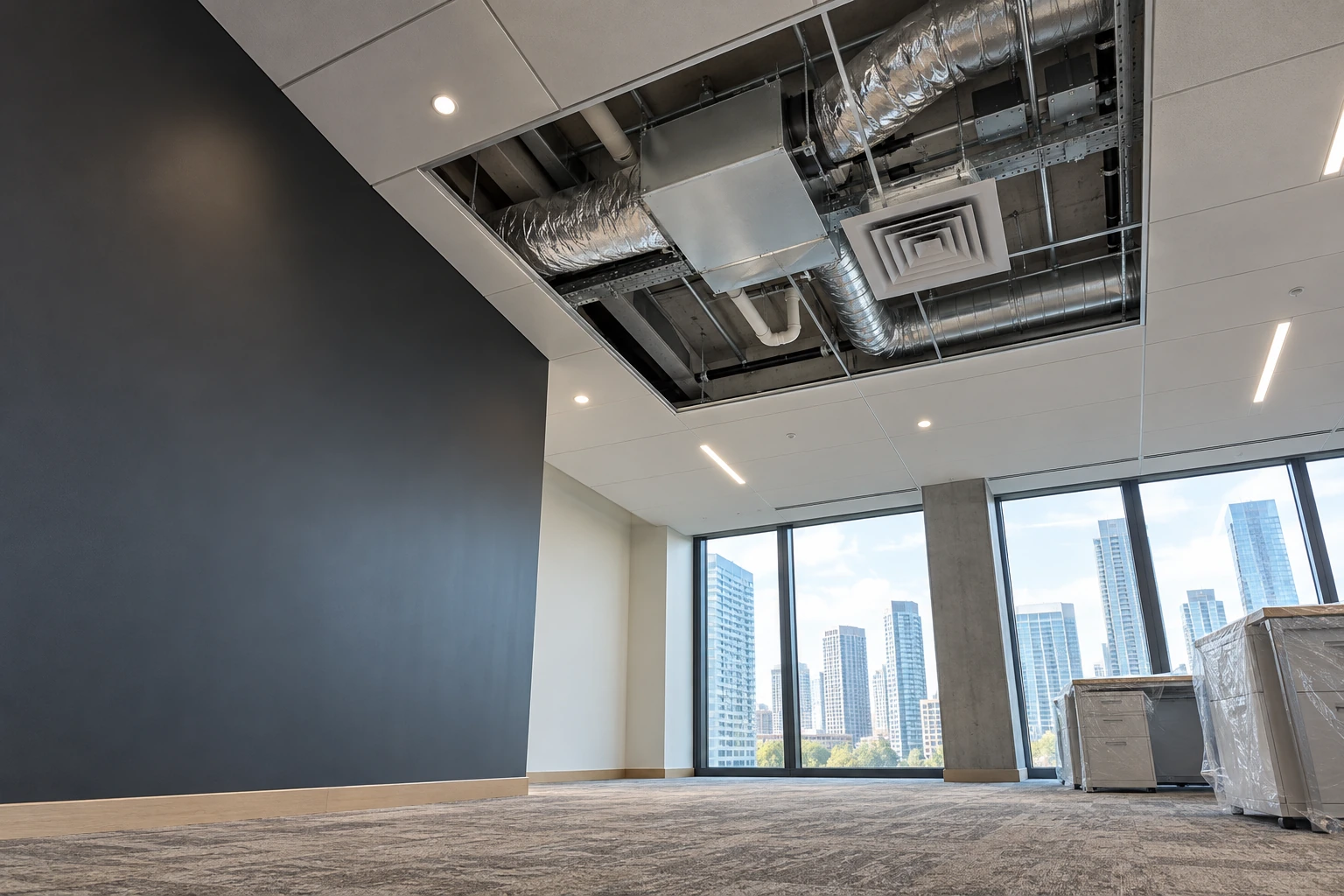
Building moisture control starts with the source, the material, and the drying condition. Commercial-building application scene. Explore ceiling installations, drainage and moisture-control requirements.
RESOURCE CATEGORIES
Move between resource groups and the related industry, product, or engineering page
01
Engineering Support
Prepare moisture sources, target conditions, airflow, drainage, installation, and control requirements for review.
Open related page → 02Agriculture & Controlled Environments (84)
Application notes and selection guidance for greenhouses, indoor cultivation rooms, drying spaces, and storage environments where humidity affects the crop rather than the building.
Browse this category → 03Industrial Dehumidification (42)
Comparisons and engineering notes covering refrigerant, ceiling-mounted, desiccant, and low-dew-point equipment, and the operating conditions that decide between them.
Browse this category → 04Energy Storage & Electrical Environments (34)
Guidance on dew point, condensation risk, compact installation, controls, and validation for battery energy storage, cabinets, containers, and switchgear.
Browse this category → 05Humidification & Air Quality (4)
Technical articles on humidification, ventilation, filtration, humidity measurement, and how moisture control interacts with wider air systems.
Browse this category → 06Humidity Science & Engineering (14)
Explanations of relative humidity, dew point, condensation, moisture measurement, monitoring, and controls for industrial humidity-control decisions.
Browse this category → 07All Articles (193)
Every article in the library, newest first.
Browse this category →TECHNICAL ARTICLE LIBRARY
Search, filter, and continue from the topic relevant to your work
Each article has a clear place in the resource library and connects to relevant industries, product families, cases, and project support.
FIND THE RIGHT RESOURCE
Search article titles, summaries, categories, and technical topics.
Search across the resource library.
Commercial Water-Damage Restoration: Drying and Moisture Verification
Separate commercial water-damage drying from mold remediation. Record material zones, cleanup responsibilities, equipment operation and moisture acceptance.

Indoor Pool Dehumidification System Costs
A project-based framework for budgeting indoor pool dehumidification equipment, installation, utilities, operation and maintenance without unsupported universal prices.
Warehouse Humidity Control Systems: Define the Load and Protected Zone
Select warehouse humidity control by the goods or surface to protect, actual moisture sources, the protected zone and equipment performance at the real air state.
Building Moisture Barriers: Water, Air and Vapor Control Layers
Distinguish water, air and vapor control layers before choosing a building membrane. Check the moisture path, climate, assembly and drying direction.
Crawl Space Humidity Control: Diagnose the Source and Choose a Route
Diagnose water, ground vapor and humid air before choosing crawl-space ventilation, sealing or dehumidification; review safety and code constraints.

Moisture Barriers for Concrete Floors: Three Different Problems, Three Different Solutions
Compare below-slab vapor retarders, surface moisture mitigation and environmental drying by source, slab tests, flooring limits and installation constraints.

How Long Does Drywall Take to Dry? Compound and Wet-Board Decisions
Drywall drying time depends on compound type or water-damaged board conditions. Contractors need separate finishing, cavity-drying and material-acceptance checks.

Why a Warehouse Floor Sweats in Spring: Diagnosis Before Equipment
A wet warehouse floor may be condensation or another water source. Compare adjacent-air dew point with measured slab temperature, then identify the moisture route before selecting equipment.

Water Damage Drying Logs: What to Record and How to Review Progress
A water-damage drying log tracks marked material readings, air conditions, equipment changes and final review. Use the same points and instrument scale; do not confuse the record with timber kiln drying.

Water-Damage Drying Equipment: A Contractor Planning Checklist
Plan commercial water-damage drying equipment by affected zones, moisture load, safe power, drainage, inspection access and documented handoff criteria.

How to Effectively Dry a Concrete Floor After a Leak
Dry a concrete floor after a leak with source control, extraction and measured drying. A contractor checklist covers equipment, drainage and flooring acceptance.

Ducted Dehumidifier Systems for Commercial Buildings: Arrangement, Sizing and Integration
Coordinate a ducted dehumidifier’s moisture removal, airflow, external pressure, controls and drainage, then verify the installed arrangement and every served zone.
NO MATCHING RESOURCES
Try a broader term or describe the application differently.
Search by equipment type, humidity issue, industry, installation condition, or a technical topic.
APPLY THE INFORMATION
Need help applying an article to a real project?
Share the application, operating conditions, target, and installation limits. We can help identify the questions that matter before product selection or engineering review.
Discuss Your Requirement