

Resources / Technical Articles
Technical Articles for Humidity-Control Decisions
Browse application notes, engineering explanations, equipment comparisons, and practical guidance for agriculture, energy, electrical, and industrial environments.
Use the article library to understand a technical question, then return to the resource center for cases, product information, video, and project-preparation material.
Start with the operating condition behind the question. Technical-reading scene. Explore application notes, selection guidance and engineering explanations.
BROWSE ARTICLE TOPICS
Start with the application or equipment context
01
Agriculture & Controlled Environments
Application notes and selection guidance for greenhouses, indoor cultivation rooms, drying spaces, and storage environments where humidity affects the crop rather than the building.
Browse articles → 02Industrial Dehumidification
Comparisons and engineering notes covering refrigerant, ceiling-mounted, desiccant, and low-dew-point equipment, and the operating conditions that decide between them.
Browse articles → 03Energy Storage & Electrical Environments
Guidance on dew point, condensation risk, compact installation, controls, and validation for battery energy storage, cabinets, containers, and switchgear.
Browse articles → 04Commercial & Building Moisture Control
Practical guidance on condensation, water damage, drying, mold prevention, and equipment choices for commercial spaces and building moisture problems.
Browse articles → 05Humidification & Air Quality
Technical articles on humidification, ventilation, filtration, humidity measurement, and how moisture control interacts with wider air systems.
Browse articles → 06Humidity Science & Engineering
Explanations of relative humidity, dew point, condensation, moisture measurement, monitoring, and controls for industrial humidity-control decisions.
Browse articles →TECHNICAL ARTICLE LIBRARY
Search, filter, and continue from the topic relevant to your work
Each article has a clear place in the resource library and connects to relevant industries, product families, cases, and project support.
FIND THE RIGHT RESOURCE
Search article titles, summaries, categories, and technical topics.
Search across the resource library.

How to Evaluate a Custom Dehumidification Equipment Partner: An Engineering Checklist
Evaluate a custom dehumidification equipment partner through the design basis, system interfaces, controlled changes and agreed factory and site acceptance evidence.

R290 vs R410A in Industrial Dehumidification
Compare R290 and R410A dehumidifier design, performance and market constraints. A2L alternatives still require charge, safety and installation assessment.
The Benefits of Using a Commercial Refrigerant Dehumidifier
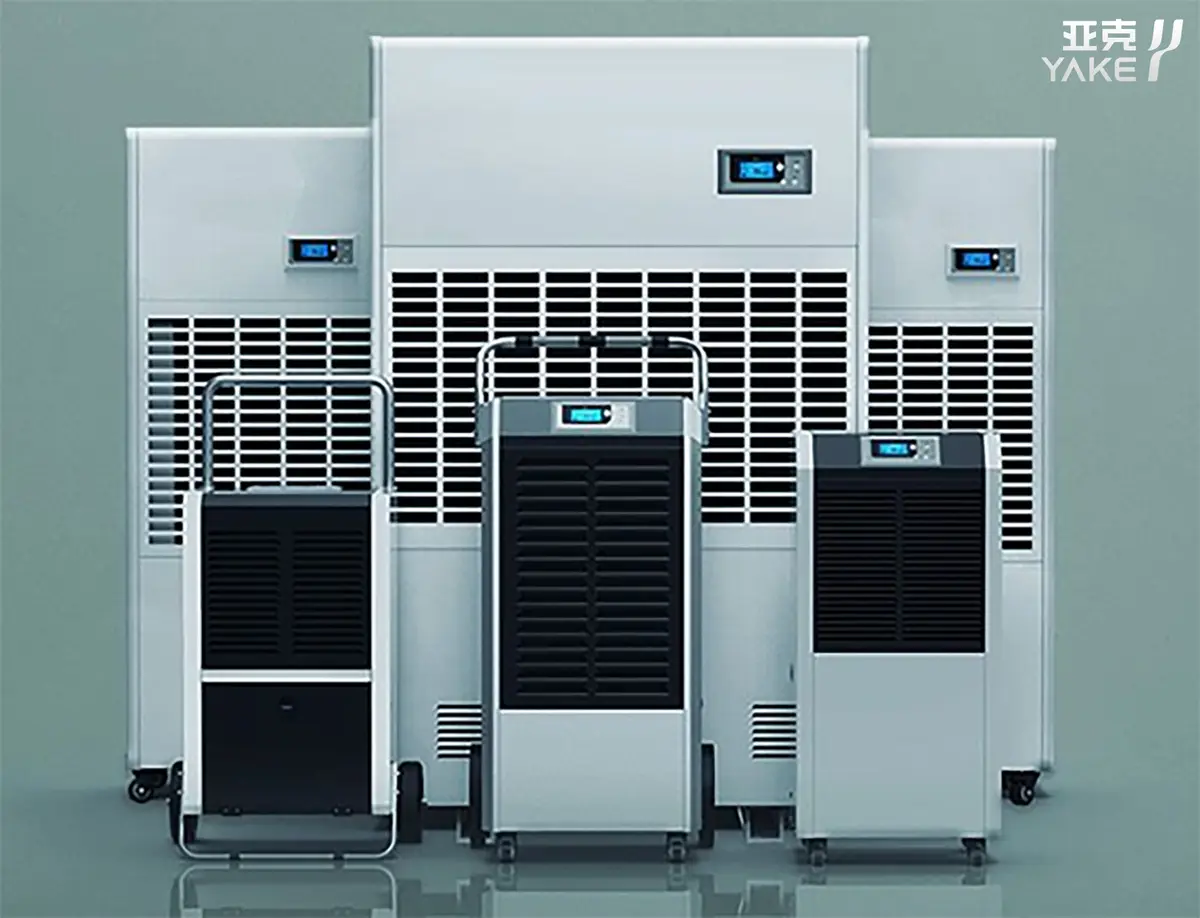

Commercial Dehumidifier Maintenance: Condition-Based


How Desiccant Dehumidifiers Work: Rotor, Reactivation and Low Dew Point Use Cases
A desiccant dehumidifier removes water vapor by adsorption. Humid process air passes through a moisture-attracting desiccant material, while a separate heated air stream dries that material so the cycle can continue.

Industrial Dehumidifier Selection for Warehouses and Storage Facilities
Warehouse humidity control is an equipment selection problem, not only a building-size problem. The right dehumidifier depends on stored materials, leakage, door openings, temperature, airflow distribution and the humidity limit the inventory actually needs.

Commercial Dehumidifier Sizing Calculator Inputs: Moisture Load Data You Need First
A commercial dehumidifier sizing calculator is only as useful as its inputs. Before you use a calculator or ask for equipment selection, define the moisture sources, operating temperatures, target RH or dew point, airflow path and safety assumptions.

Tomato Greenhouse Dehumidification: VPD, Disease Risk and Equipment Sizing Inputs
Tomato greenhouse dehumidification should be sized around transpiration, night cooling and canopy airflow. RH alone is not enough because disease risk and plant water movement depend on temperature, leaf wetness and vapor pressure deficit.

Best Industrial Dehumidifier for Greenhouse Projects: Selection Criteria That Matter
The best industrial dehumidifier for a greenhouse is the one that can remove the crop's real moisture load while matching the greenhouse temperature range, airflow path, drainage, corrosion exposure and control strategy. A brand list is less useful than a clear selection checklist.

Industrial Dehumidifier for Greenhouse Cost: What Changes the Quote
The cost of an industrial dehumidifier for a greenhouse depends on moisture load, technology choice, airflow distribution, corrosion protection, controls and installation scope. A price without those inputs is usually not a reliable project number.

Low-Temperature Desiccant Dehumidification for Wind and Substation Equipment
Wind turbines and substation equipment can face cold metal surfaces, humid air, repeated temperature changes and long periods with limited service access. In these conditions, the environmental-control question is not simply “how many litres per day?”

Air Leakage, Service Doors and Moisture Load in Sealed Enclosures
A sealed electrical enclosure is not automatically a moisture-free enclosure. Water vapour may be trapped during assembly, introduced when service doors open or exchanged through gaskets, cable entries, vents and pressure-equalisation devices.
NO MATCHING RESOURCES
Try a broader term or describe the application differently.
Search by equipment type, humidity issue, industry, installation condition, or a technical topic.
APPLY THE INFORMATION
Need help applying an article to a real project?
Share the application, operating conditions, target, and installation limits. We can help identify the questions that matter before product selection or engineering review.
Discuss Your Requirement