
Resources / Agriculture
Humidity Control for Growing and Post-Harvest Environments
Application notes and selection guidance for greenhouses, indoor cultivation rooms, drying spaces, and storage environments where humidity affects the crop rather than the building.
Use these articles to describe the growing conditions, moisture load, and airflow situation before comparing equipment.
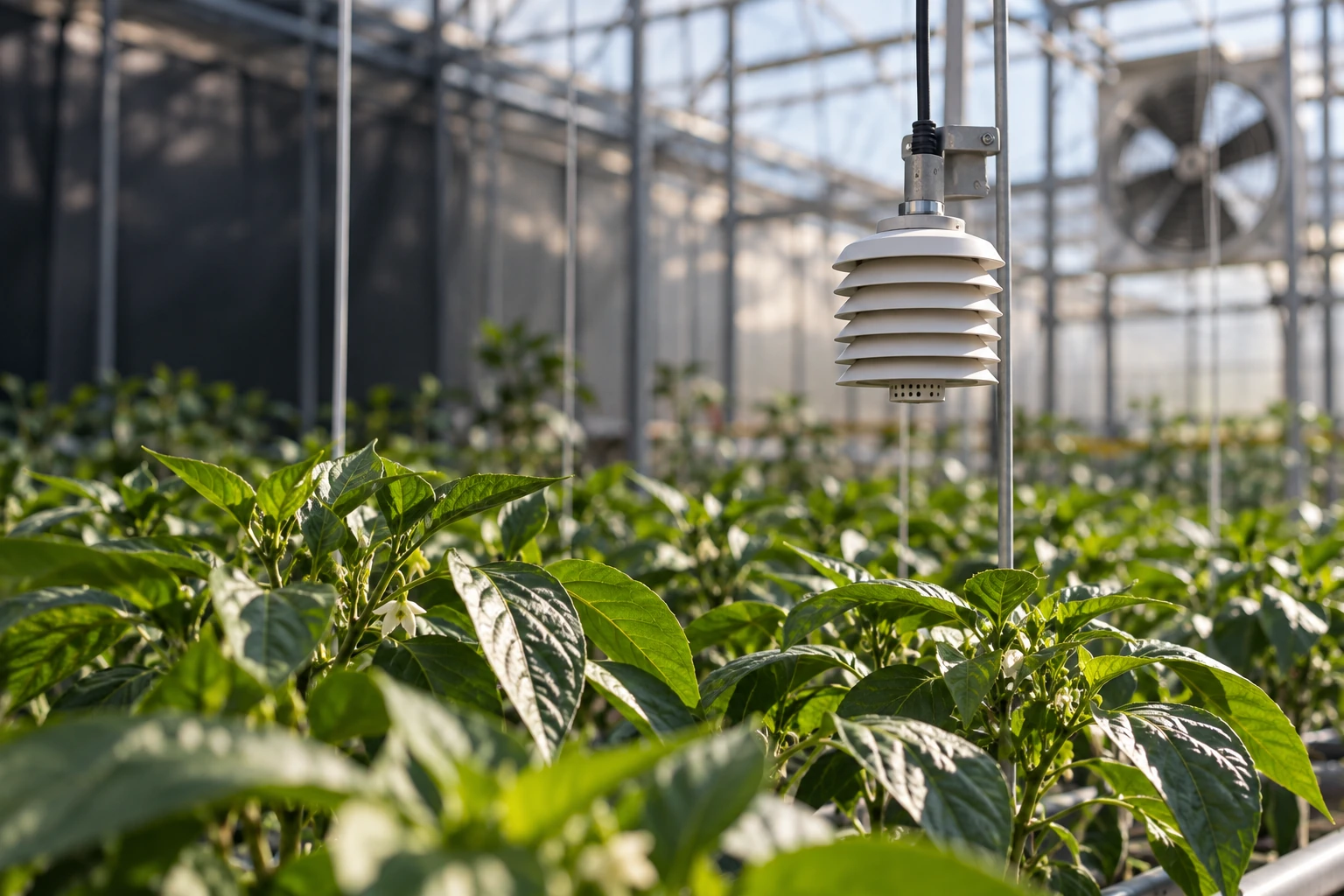
Humidity in a growing space is a crop condition, not just a comfort setting. Cultivation-measurement scene. Read about crop environments, transpiration and condensation.
RESOURCE CATEGORIES
Move between resource groups and the related industry, product, or engineering page
01
Agriculture — YAKE
Equipment families, project support, and application scope for cultivation, greenhouse, and controlled-environment facilities.
Open related page → 02Industrial Dehumidification (42)
Comparisons and engineering notes covering refrigerant, ceiling-mounted, desiccant, and low-dew-point equipment, and the operating conditions that decide between them.
Browse this category → 03Energy Storage & Electrical Environments (34)
Guidance on dew point, condensation risk, compact installation, controls, and validation for battery energy storage, cabinets, containers, and switchgear.
Browse this category → 04Commercial & Building Moisture Control (15)
Practical guidance on condensation, water damage, drying, mold prevention, and equipment choices for commercial spaces and building moisture problems.
Browse this category → 05Humidification & Air Quality (4)
Technical articles on humidification, ventilation, filtration, humidity measurement, and how moisture control interacts with wider air systems.
Browse this category → 06Humidity Science & Engineering (14)
Explanations of relative humidity, dew point, condensation, moisture measurement, monitoring, and controls for industrial humidity-control decisions.
Browse this category → 07All Articles (193)
Every article in the library, newest first.
Browse this category →TECHNICAL ARTICLE LIBRARY
Search, filter, and continue from the topic relevant to your work
Each article has a clear place in the resource library and connects to relevant industries, product families, cases, and project support.
FIND THE RIGHT RESOURCE
Search article titles, summaries, categories, and technical topics.
Search across the resource library.

Grow Room Dehumidifier Placement: Air Paths, Sensors, Heat and Drainage
Plan grow room dehumidifier placement around supply and return air, canopy sensors, heat, drainage and service access, then verify the affected crop zone.

What Is the Ideal Humidity for a Greenhouse? Set a Crop-Specific RH Target
A general RH range is not a greenhouse setpoint. Define a crop- and period-specific operating band, then test it against canopy measurements, cold surfaces and control limits.

Central vs Distributed Greenhouse Dehumidification: Decide by Zone and Air Path
Choose a greenhouse dehumidification layout by measured crop-zone duty and delivered air, then check controls, heat, drains and service access.

Slow Canopy Drying After Irrigation: Find the Water Path First
When greenhouse leaves stay wet after irrigation, record the water path and drying window before changing climate controls or selecting equipment.

High-Altitude Greenhouse Humidity: Check Pressure Before Sizing Airflow
A high-elevation equipment review starts with station pressure, paired moisture measurements and actual airflow through the crop zone.

Arid Greenhouse Humidity With Fan-and-Pad Evaporative Cooling
An arid-site decision guide for fan-and-pad cooling, crop-zone humidity, makeup water and any remaining removal duty.

Tropical Greenhouse Humidity Control: Decide When Water Removal Is Needed
A tropical-site decision guide for rain covers, ventilation, crop moisture needs and measured dehumidification duty.

Multi-Span Greenhouse Humidity Control: Diagnose Across Connected Spans
A span-by-span guide to greenhouse humidity mapping, roof condensation, ventilation states and equipment handoff.

Shipping-Container Farm Humidity Control: Measure Across Rack Levels Before Selecting Equipment
A container-farm guide to crop-zone measurements, air distribution, water removal and equipment handoff in a narrow multi-rack grow room.

Rooftop Greenhouse Humidity Control: Separate Crop Air from Building Interfaces
A rooftop greenhouse guide to moisture diagnosis, host-building boundaries, ventilation choices and air-treatment equipment handoff.

Research Greenhouse Humidity Control: Keep Treatments, Measurements and Air Systems Aligned
A research greenhouse guide to treatment air boundaries, independent environmental records, moisture-event investigation and equipment review inputs.

Aquaponic Greenhouse Humidity Control: Map Fish Tanks, Plant Zones and Moisture Sources
An aquaponic greenhouse guide to mapping shared air volumes, fish-tank and plant-zone moisture sources, water-quality safeguards and equipment review inputs.
NO MATCHING RESOURCES
Try a broader term or describe the application differently.
Search by equipment type, humidity issue, industry, installation condition, or a technical topic.
APPLY THE INFORMATION
Need help applying an article to a real project?
Share the application, operating conditions, target, and installation limits. We can help identify the questions that matter before product selection or engineering review.
Discuss Your Requirement