
Resources / Industrial
Industrial Dehumidification Equipment and Selection Resources
Comparisons and engineering notes covering refrigerant, ceiling-mounted, desiccant, and low-dew-point equipment, and the operating conditions that decide between them.
Use these articles to narrow the technology before discussing capacity, installation position, and controls.
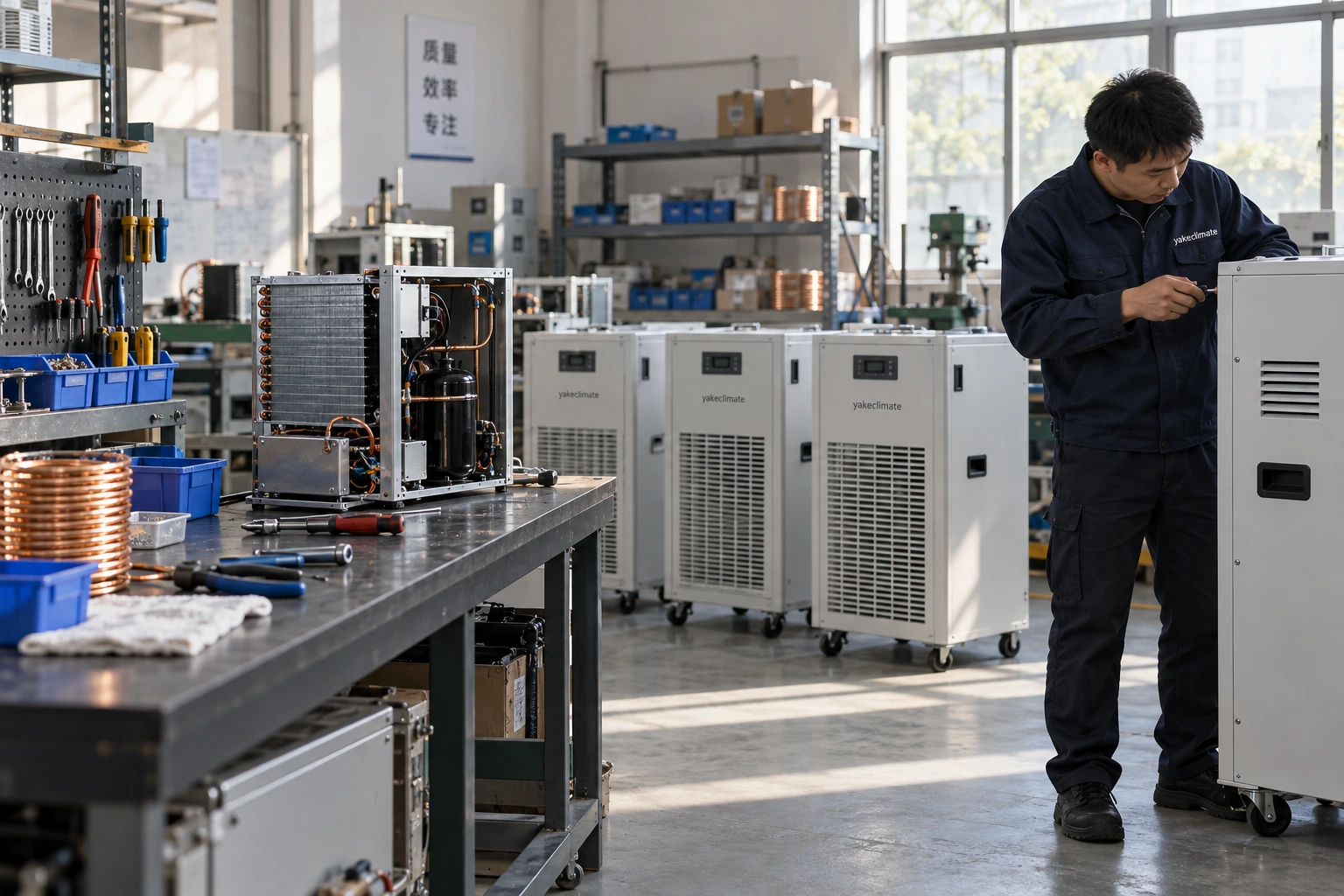
Technology choice follows the operating conditions, not the catalog order. Compact-equipment workshop scene. Explore industrial equipment selection and operating requirements.
RESOURCE CATEGORIES
Move between resource groups and the related industry, product, or engineering page
01
Product Families
Compare refrigerant, ceiling, desiccant, and humidification equipment families with their operating ranges.
Open related page → 02Agriculture & Controlled Environments (84)
Application notes and selection guidance for greenhouses, indoor cultivation rooms, drying spaces, and storage environments where humidity affects the crop rather than the building.
Browse this category → 03Energy Storage & Electrical Environments (34)
Guidance on dew point, condensation risk, compact installation, controls, and validation for battery energy storage, cabinets, containers, and switchgear.
Browse this category → 04Commercial & Building Moisture Control (15)
Practical guidance on condensation, water damage, drying, mold prevention, and equipment choices for commercial spaces and building moisture problems.
Browse this category → 05Humidification & Air Quality (4)
Technical articles on humidification, ventilation, filtration, humidity measurement, and how moisture control interacts with wider air systems.
Browse this category → 06Humidity Science & Engineering (14)
Explanations of relative humidity, dew point, condensation, moisture measurement, monitoring, and controls for industrial humidity-control decisions.
Browse this category → 07All Articles (193)
Every article in the library, newest first.
Browse this category →TECHNICAL ARTICLE LIBRARY
Search, filter, and continue from the topic relevant to your work
Each article has a clear place in the resource library and connects to relevant industries, product families, cases, and project support.
FIND THE RIGHT RESOURCE
Search article titles, summaries, categories, and technical topics.
Search across the resource library.

Commercial Portable Dehumidifiers: Where They Fit and Where They Stop Working
The most effective thing you can do with a portable dehumidifier usually has nothing to do with the dehumidifier. It is to reduce the volume it has to treat.

How to Choose a Rotary Desiccant Dehumidifier for Industrial Duty
Select a rotary desiccant dehumidifier from the required outlet moisture condition, process airflow, entering air, reactivation heat and total system boundary—not from a generic claim that it runs quietly or saves energy.

Desiccant Dehumidification for Medical Device Manufacturing and Storage
Specify medical-device process humidity control by separating ambient air RH/dew-point duties from validated material sample water-activity acceptance.

Commercial Ceiling Dehumidifiers: Structure, Airflow, Drainage and Access
Ceiling-mounted dehumidifiers can free floor space for crops, storage or cleaning. Before choosing one, check whether the building can support it and whether air, condensate and maintenance personnel can reach the places they need to. The installation must serve the working zone, not simply fit inside the ceiling void.

10 Steps to Improve Commercial Portable Dehumidifier Efficiency
A practical way to measure water removed per unit of electricity and improve controls, airflow, moisture load and maintenance without assuming that a catalogue rating predicts site performance.

Purchasing Industrial Dehumidifiers from China: An Evidence Checklist
Compare operating conditions, performance evidence, configuration, supply scope and acceptance tests when purchasing industrial dehumidifiers from China.
NO MATCHING RESOURCES
Try a broader term or describe the application differently.
Search by equipment type, humidity issue, industry, installation condition, or a technical topic.
APPLY THE INFORMATION
Need help applying an article to a real project?
Share the application, operating conditions, target, and installation limits. We can help identify the questions that matter before product selection or engineering review.
Discuss Your Requirement