
Resources / Agriculture
Humidity Control for Growing and Post-Harvest Environments
Application notes and selection guidance for greenhouses, indoor cultivation rooms, drying spaces, and storage environments where humidity affects the crop rather than the building.
Use these articles to describe the growing conditions, moisture load, and airflow situation before comparing equipment.
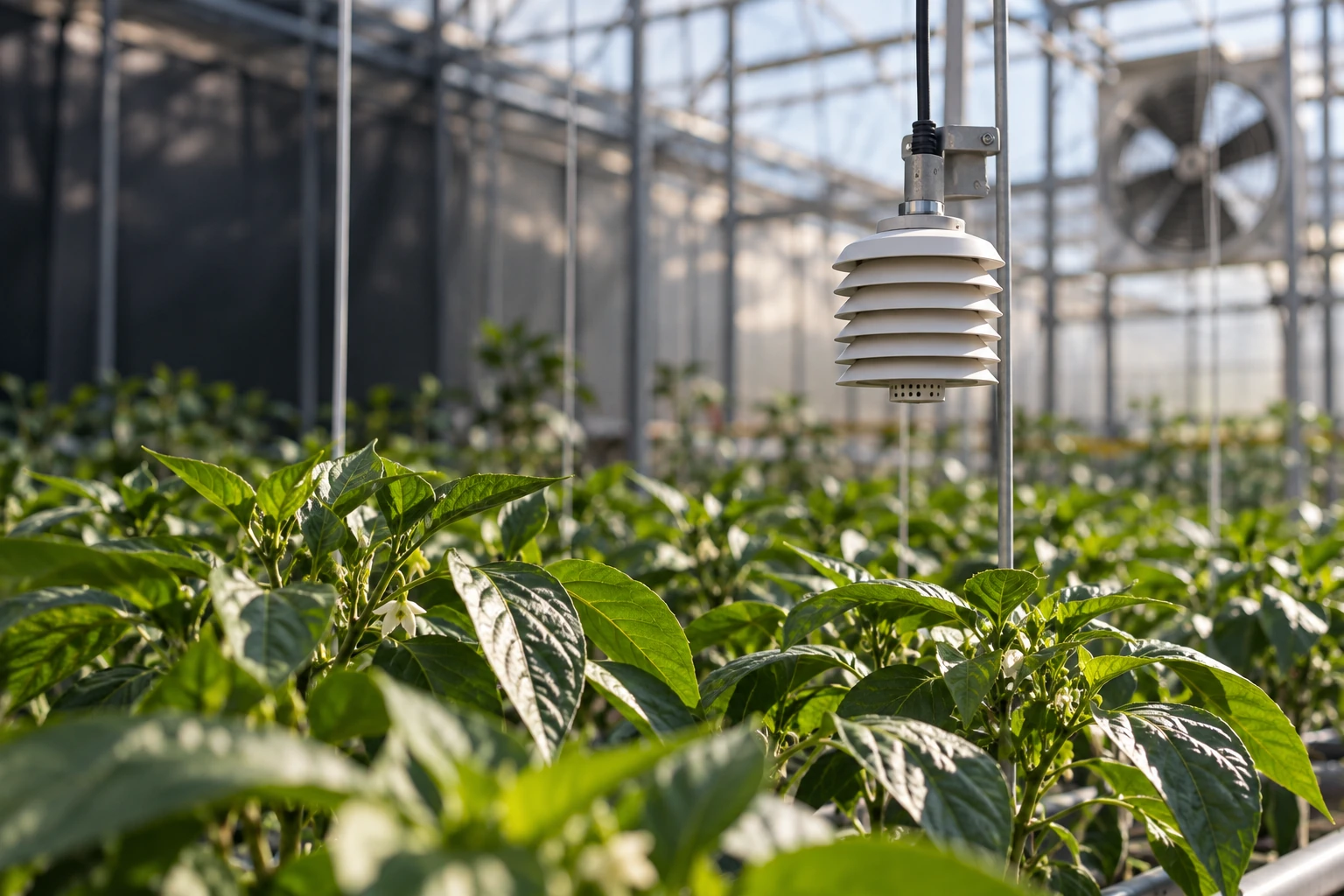
Humidity in a growing space is a crop condition, not just a comfort setting. Cultivation-measurement scene. Read about crop environments, transpiration and condensation.
RESOURCE CATEGORIES
Move between resource groups and the related industry, product, or engineering page
01
Agriculture — YAKE
Equipment families, project support, and application scope for cultivation, greenhouse, and controlled-environment facilities.
Open related page → 02Industrial Dehumidification (42)
Comparisons and engineering notes covering refrigerant, ceiling-mounted, desiccant, and low-dew-point equipment, and the operating conditions that decide between them.
Browse this category → 03Energy Storage & Electrical Environments (34)
Guidance on dew point, condensation risk, compact installation, controls, and validation for battery energy storage, cabinets, containers, and switchgear.
Browse this category → 04Commercial & Building Moisture Control (15)
Practical guidance on condensation, water damage, drying, mold prevention, and equipment choices for commercial spaces and building moisture problems.
Browse this category → 05Humidification & Air Quality (4)
Technical articles on humidification, ventilation, filtration, humidity measurement, and how moisture control interacts with wider air systems.
Browse this category → 06Humidity Science & Engineering (14)
Explanations of relative humidity, dew point, condensation, moisture measurement, monitoring, and controls for industrial humidity-control decisions.
Browse this category → 07All Articles (193)
Every article in the library, newest first.
Browse this category →TECHNICAL ARTICLE LIBRARY
Search, filter, and continue from the topic relevant to your work
Each article has a clear place in the resource library and connects to relevant industries, product families, cases, and project support.
FIND THE RIGHT RESOURCE
Search article titles, summaries, categories, and technical topics.
Search across the resource library.
Greenhouse Tomato Cracking: Humidity Is One Part of the Cause
Understand tomato crack patterns and the interacting roles of humidity, water movement, fruit skin, cultivar, fruit load, and temperature.
Greenhouse Disease After Cloudy Weather: Reading a Botrytis Warning
Connect cloudy-weather warnings with crop tissue and symptom history.
Greenhouse Edema and Humidity: Blisters Are Not Always Disease
Understand physiological plant edema, intumescence, root-zone water uptake, and greenhouse humidity without treating every leaf blister as disease.
Greenhouse Heat Recovery and Dehumidification: Compare the Water and Heat Paths
Compare greenhouse water removal, heat recovery and operating conditions.
Greenhouse Tomato Pollination and Humidity: Release, Transfer and Fruit Set
Understand how greenhouse humidity and temperature affect tomato pollen release, stigma transfer, adhesion, and fruit-set interpretation.
Powdery Mildew and Greenhouse Humidity: Why Dry Leaves Are Not Enough
Learn why dry leaves and a greenhouse RH setting do not diagnose powdery mildew, and how tomato, cucurbit, and general greenhouse evidence should be recorded separately.
Stomatal Response to Greenhouse Humidity: Why Growth History Matters
Compare immediate cucumber responses, reversible mature-leaf CO2 sensitivity in Vicia faba, and growth-stage-dependent rose stomatal closing capacity.
Uneven Crop Humidity Zones: What Greenhouse Measurements Show
Interpret greenhouse humidity differences using matched locations and averaging periods.

Root-Zone Moisture vs Air Humidity in Greenhouses
Different measurement objects explain why air humidity cannot replace root-zone moisture readings.

Leaf Wetness Duration in Greenhouses: Reading the Record
Interpret wet-duration records by sensing method, interval definition, raw output, coverage and missing periods.

Greenhouse Humidity Sensor Selection: Accuracy, Shielding, and Calibration
Greenhouse humidity control depends on the quality of the data. A dehumidifier can be correctly selected and still look wrong if the sensor is exposed to direct sun, located near a heater or drifting away from reference readings.

Solar-Powered Greenhouse Dehumidification: Why the Load Must Be Checked First
Solar-powered greenhouse dehumidification is possible only after the moisture load and operating schedule are known. The key question is not whether a solar panel can run a dehumidifier for a few hours. The key question is whether power is available when the greenhouse needs moisture removal.
NO MATCHING RESOURCES
Try a broader term or describe the application differently.
Search by equipment type, humidity issue, industry, installation condition, or a technical topic.
APPLY THE INFORMATION
Need help applying an article to a real project?
Share the application, operating conditions, target, and installation limits. We can help identify the questions that matter before product selection or engineering review.
Discuss Your Requirement